
The news cycle has been heavy lately. Between the geopolitical gravity and the tragic human cost of the US-Israel-Iran conflict that erupted in late February, there is a lot to process. But beyond the front-page headlines, a secondary crisis is quietly simmering in the financial markets: a renewed threat to global inflation.
If you’re feeling a bit uneasy about your budget or your 401(k) right now, you aren’t alone. It’s a lot to navigate. Let’s break down exactly how this 2026 conflict is rattling global markets and what it means for your wallet.
1. The Energy Chokepoint: Why the Strait of Hormuz Matters
The most immediate “shock” has hit where it hurts most: the gas pump and the power grid. Much of the recent military activity has centered around the Strait of Hormuz.
Why is this a big deal? This narrow waterway is the world’s most important energy artery, carrying roughly 20% to 25% of the globe’s oil and liquefied natural gas (LNG). * The Oil Spike: Fears of a long-term closure sent Brent crude oil screaming past $100, even touching $119 per barrel.
-
The Gas Crunch: With regional giants like QatarEnergy pausing shipments for safety, natural gas prices in Europe have spiked, creating a nervous energy market worldwide.
The Bottom Line: Energy is the “hidden ingredient” in everything. When it costs more to fuel a tractor or a cargo ship, the price of your groceries and Amazon packages inevitably goes up.

2. The Inflationary Ripple Effect
Before this conflict, central banks were finally starting to see the light at the end of the post-pandemic inflation tunnel. This war has effectively pulled the emergency brake on that progress.
Here’s how the experts are weighing the damage:
-
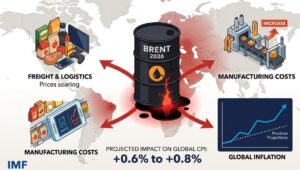
The IMF’s Math: The International Monetary Fund warns that for every 10% jump in oil prices, global inflation typically climbs by 0.4 percentage points.
-
Supply Chain Snags: It’s not just the fuel; it’s the route. Rerouting ships and planes away from the conflict zone creates bottlenecks, making everyday goods scarcer and more expensive.
3. The Central Bank Dilemma: Stuck Between a Rock and a Hard Place
This is where it gets tricky for policymakers at the Federal Reserve and the ECB. They are facing the “S-word”: Stagflation. This is the nasty economic combo where inflation rises while economic growth slows down.
We were all hoping for interest rate cuts this year. However, with energy prices driving inflation back up, central banks may be forced to keep interest rates higher for longer to keep prices from spiraling. For us, that means more expensive mortgages and credit card debt for the foreseeable future.
4. Seeking Safety in a Storm
When the world feels unstable, investors look for “financial bunkers.” We’ve seen a massive rush into safe-haven assets:
-
Gold: Prices skyrocketed past $5,200 per ounce as people lost confidence in paper currency.
-
Stocks: The S&P 500 and Dow Jones have seen significant sell-offs as companies scramble to cover their rising operating costs.

The Big Picture
The economic forecast for the rest of 2026 is now tied directly to the duration of the conflict. If the Strait of Hormuz reopens fully and tensions de-escalate, this might just be a temporary blip. But the longer the disruption lasts, the more these high costs will become the “new normal” for the global economy.